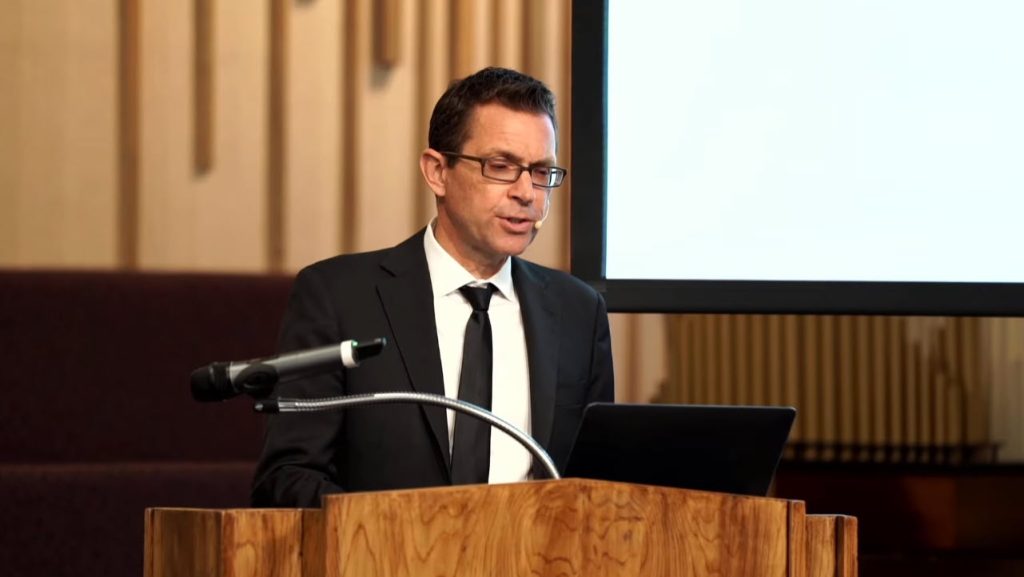

This video is a sermon-style exposition focused on the Second Angel’s Message (Revelation 14:8) as part two of a three-part series on the three angels’ messages. The speaker develops a sequence of Biblical themes and connections to explain what “Babylon” and the symbolic “wine” represent, why the message matters for the last days, and how it connects with the First Angel’s Message and Christ’s call to His people.
Below are the main points and the biblical reasoning used in the talk, organized for clarity.
1. Opening prayer and purpose
- The speaker begins with a prayer of thanks for Sabbath, creation, protection, and guidance.
- Stated goal: to explain the Second Angel’s Message, what “Babylon” and “wine” symbolize, and the spiritual danger involved.
2. The Second Angel’s Message (Revelation 14:8)
- Quote: “And followed another angel, saying, Babylon is fallen, is fallen, that great city, because she made all nations drink of the wine of the wrath of her fornication.”
- The sermon asks: What does “wine” mean here? Is it literal alcohol, or a symbol? What is the “fornication” being referred to?
3. Wine as a biblical symbol of deception and corruption
- Biblical references used:
- Proverbs 20:1 — “Wine is a mocker… strong drink is raging” — wine deceives and incites ruin.
- Isaiah 28 (esp. vv. 1–3, 7–8) — drunkenness, pride, and moral decay lead to ruin; leaders (priests/prophets) are implicated.
- Proverbs 23:29–32 — wine’s allure is compared to a serpent’s bite; it seduces and then harms.
- Conclusion: “Wine” in Revelation is symbolic of deception that seduces people into pride, idolatry, and turning away from God. It is connected repeatedly with pride, deception, and spiritual ruin.
4. The deceiver: the dragon/serpent (Satan)
- Connections:
- The Bible repeatedly links serpent/dragon imagery with Satan (Revelation 12:9; Genesis 3).
- The “wine” that stupefies and kills is likened to devilish deception that keeps people from believing truth (John 8:44; 2 Thessalonians 2:10–12).
- The speaker emphasizes that the drinking of the symbolic wine is the acceptance of Satan’s lies rather than God’s truth.
5. Babylon as a corrupt religious-political system
- Revelation 17 identifies a woman (a church) riding a scarlet beast with seven heads and ten horns; she holds a golden cup full of abominations and her name is “Babylon the Great.”
- The sermon ties Babylon back to ancient Babel/Babylon (Genesis 11): the human attempt to centralize, unify under a worldly system and refuse God’s command to “replenish the earth.”
- Historical notes: The image of Babylon’s fall links to Daniel and Belshazzar (Daniel 5) — drunken feasting, sacrilege, handwriting on the wall, and sudden judgment.
- The woman (Babylon) represents a false religious system that prostitutes itself to worldly power, wealth, and idolatry — leading nations into spiritual fornication.
6. Fornication explained as spiritual unfaithfulness/idolatry
- “Fornication” in prophetic symbolism = idolatry and unfaithfulness to God (e.g., Hosea, Ezekiel).
- Proverbs 7 is used as a typological illustration: the “strange woman” who seduces an unwise man is a picture of spiritual seduction — flattering speech, enticing promises, and moral downfall.
- The seduction is gradual and persuasive: the deceived person chooses to go; flattery and false promises cause moral decline until ruin (death, spiritual destruction).
7. Connection with the First Angel’s Message
- The First Angel’s Message (Revelation 14:6–7) preaches the “everlasting gospel” — worship the Creator, for the hour of His judgment has come.
- The speaker argues the Second Angel’s Message acts as a warning that some will reject the Creator’s truth and accept Babylon’s wine (falsehoods) instead.
- The fall of Babylon follows the failure to honor God’s creative authority and to accept God’s message of judgment, worship, and truth.
8. The danger of false doctrine and spiritual complacency
- Galatians 1:6–9 is cited: there can be “another gospel,” and those who preach it are to be rejected — a stern warning against receiving perverted teaching.
- Ephesians 4:14 — believers are warned not to be “tossed to and fro” by wind-of-doctrine and craftiness; deception will abound in the last days.
- The seduction of Babylon is often subtle, attractive, and culturally appealing (i.e., it “tastes” good but it kills).
9. The call to separation and the loud cry
- Revelation 18:4 — “Come out of her, my people…” (a call to leave Babylon and not partake of her sins or her plagues).
- The speaker emphasizes that the loud cry will amplify the Second Angel’s Message and is a call for God’s people to separate themselves from false systems and false gospels.
- The message includes both warning and hope: God’s people can be restored, forgiven, and prepared for Christ’s return if they accept truth and covenant commit (true faith = trust and commitment).
10. Practical and pastoral appeals
- The speaker urges self-examination: do we love truth enough to be corrected? Will we commit to God’s commandments and to fidelity to Christ (the true Husband)?
- The imagery of bride/church and husband/Christ (Ephesians 5; 2 Corinthians 11:2–3) is used to show the seriousness of spiritual infidelity.
- The sermon finishes with gratitude for the Holy Spirit’s guidance and a prayer that listeners will see the connections in Scripture and respond to God’s truth.
Key takeaways
- “Wine” in Revelation 14:8 symbolizes spiritual deception and the seductive lies that lead people and nations away from God.
- “Babylon” represents a corrupt religious-political system that mixes religious authority and worldly power, leading to spiritual fornication (idolatry).
- The Second Angel’s Message is a solemn warning to avoid the seductive errors of Babylon and to heed the First Angel’s call to worship the Creator and accept God’s judgment truth.
- The Biblical pattern shows that acceptance of falsehood leads to ruin; separation from Babylon and wholehearted commitment to Christ are essential in the end time.
- The “loud cry” invites God’s people to come out of Babylon, embrace truth, and prepare for the return of Jesus.